How to Spot a Quality Football Jersey (2026 Guide)
Published March 21, 2026 · Updated August 5, 2026 · 7 min read
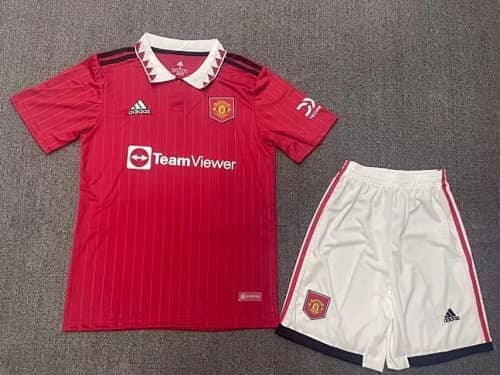
Every jersey looks good in a product photo. The difference between a quality shirt and a disappointment only shows once you hold it: how the fabric breathes, how the seams are finished, whether the crest is embroidered or merely stuck on, and how the print behaves after the first wash.
Since 2014 we have handled thousands of jerseys and know exactly where cheap production cuts corners. This guide walks through every detail that separates a quality jersey from a letdown, plus a checklist for the moment your order arrives.
Fabric: not all polyester is equal
Practically every modern jersey is 100% polyester, but weight and knit make an enormous difference. A quality jersey uses fabric around 140-160 g/m2 that feels light yet is not see-through. Cheap knock-offs often drop below 120 g/m2, so the shirt turns translucent and loses shape after a few wears.
Major manufacturers use moisture-wicking technologies (Nike calls it Dri-FIT, Adidas calls it AEROREADY): the fibers are knitted to pull sweat from the skin to the outer surface. The test is simple: hold the jersey against your mouth and blow through it. If air passes easily, the fabric breathes; if it feels like blowing into a plastic bag, the material is poor.
Another quality marker is mesh panels under the arms, on the back, or along the sides. These are not decoration but functional ventilation zones, and their presence means the shirt was built to an athletic pattern rather than a fashion one. See how this looks on the Adidas and Nike models in our range.
The crest: embroidered, heat-applied, or printed
The club crest is the first place where costs get cut. There are three tiers of workmanship: an embroidered crest (thread, raised under your fingers), a heat-applied crest in silicone or TPU (smooth, slightly raised, typical for player editions because it chafes less), and a plain print (completely flat, part of the fabric).
None of the three is bad in itself, but it has to match the jersey type: fan editions traditionally carry embroidered crests, while player editions use heat-applied badges for weight and aerodynamics. The bad sign is a crest that looks like a sticker with lifting edges, or embroidery with loose, protruding threads.
- Run a finger over the crest: embroidery must be dense, with no gaps showing the fabric underneath.
- Check the inside of the jersey behind the crest: a tidy reverse side signals good machinery and quality control.
- On heat-applied badges the edges must be fully bonded, with no air bubbles.
- Compare crest colors with the official ones: cheap production often misses the shade of red or blue.
Sublimation: why the design must not wash out
Sublimation printing is a technique where dye turns into gas at high temperature (around 200 degrees Celsius) and bonds directly with the polyester fibers. The result: the design, stripes, and patterns become part of the fabric rather than a layer on top of it. That is why a quality jersey does not peel, crack, or fade even after dozens of washes.
How to check? Stretch the fabric on a patterned area of the shirt. With sublimation, the color stretches together with the fibers without white cracks. If you see white dots between the threads when stretched, the design was surface-printed and will start to deteriorate. This matters especially for jerseys with complex graphic patterns, which dominate the new arrivals of the 2025/26 season.
Seams and cut: where a poor jersey betrays itself first
Turn the jersey inside out and study the seams. A quality shirt has even stitching, around 10-12 stitches per 3 cm, with no skipped spots or hanging threads. Shoulders and sides take the most strain, so look for double or flatlock seams there (flat, stretchy, no skin irritation).
The second test is cut consistency: lay the jersey on a flat surface and check that both sleeves are the same length, the collar is symmetrical, and the bottom hem sits straight. A twisted collar seam or a sleeve off by half a centimeter are classic signs of rushed, sloppy production. If you are unsure how the cut should sit on you, see our sizing guide.
Arrival checklist: what to inspect when your jersey lands
The first five minutes with the jersey in hand are the best moment for inspection. Go through this list before removing any tags:
- Inspect all seams from the inside: no hanging threads, holes, or skipped stitches.
- Stretch the fabric on the pattern: color must follow the fibers without white cracking.
- Check the crest and sponsor logos: firmly bonded or densely embroidered, with flat edges.
- Compare measurements against the product page size chart (width under the arms, length).
- Smell the jersey: a mild print smell is normal and airs out; a sharp chemical odor is not.
Price vs quality: what you can realistically expect
A quality jersey does not have to cost official club store money, where prices go beyond 90 euros. Our jerseys are around 45 euros, and the price difference comes from the sourcing channel, not the build quality: the same type of polyester, sublimation printing, and heat-applied details.
What is a red flag are extremely low prices with unrealistic promises. A 10-euro jersey physically cannot combine quality fabric, embroidery, and printing, because the materials alone cost more. If you want to compare build tiers in person, the easiest way is to order one fan and one player model and put them side by side.
Once you learn to read the fabric, seams, crest, and print, no product photo will fool you again. Those four details tell you more about a jersey than any product description. And if you want your shirt to look new after two full seasons, read our jersey care guide.
Have questions about a specific model? Write to us and we will send build details before you order, or browse the full range in the shop right away.
Frequently asked questions
Is a printed crest always a sign of a bad jersey?
No. Heat-applied (silicone) crests are the standard on player editions because they are lighter than embroidery. The only bad sign is cheap surface printing with peeling edges or color that cracks when stretched.
How can I test fabric quality at home?
Two quick tests: blow through the fabric (air must pass easily) and stretch it on a patterned area (the color must follow the fibers without white cracks). The jersey should feel light but never see-through.
What if my jersey arrives with a manufacturing flaw?
Contact us right away with photos and your order code. Standard items can be exchanged; personalized jerseys with a printed name and number are excluded from standard exchanges, so flaws there are handled case by case.
Shop related collections
Find your next jersey
Browse national team kits, club shirts, retro classics, and kids sizes — with worldwide shipping.
Browse the shopKeep reading
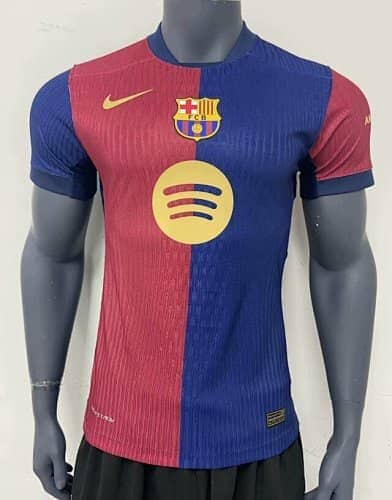
Player Version vs Fan Version Jerseys: What Is the Difference?
Player and fan version jerseys look alike in photos but differ in fabric, cut, and how the badges are made. We break down every difference and who should buy which.
How to Care for a Football Jersey So It Lasts Years (Guide)
Jerseys are not destroyed by time but by wrong washing. Here are the exact rules: temperature, inside-out washing, drying, ironing, and reviving older shirts.